Bank of England Faces Pressure to Hike Interest Rates Again
Central bank expected to raise interest rates as inflation forecasts climb to 5%. Households brace for higher borrowing costs amid economic uncertainty.
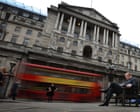
Interest Rate Rise Pressure Mounts as Inflation Projections Climb
An interest rate rise appears increasingly unavoidable as the Bank of England confronts mounting inflationary pressures threatening the broader economy. Recent central bank forecasts project inflation accelerating to 5% in spring, creating substantial momentum for policymakers to implement additional borrowing cost increases. Financial analysts expect this interest rate rise could materialize within weeks, fundamentally altering lending conditions for households and businesses across the United Kingdom.
The trajectory toward higher rates reflects concerns about persistent price growth that has outpaced wage increases for extended periods. As inflation remains stubbornly elevated, the Bank of England faces mounting calls from economists and market participants to tighten monetary policy through successive rate hikes. These adjustments aim to cool demand and anchor inflation expectations, though implementation carries significant risks for household finances and economic stability.
December Meeting Could Trigger Next Rate Decision
Policy experts increasingly anticipate the Bank's monetary policy committee will convene on 17 December with decisions favoring monetary tightening. A growing consensus among financial analysts suggests policymakers will adopt austere stances, emphasizing sacrifice and disciplined spending as necessary responses to inflationary dynamics. This messaging would underscore the painful tradeoffs inherent in price stability efforts.
The timing of potential rate adjustments carries particular significance given current economic fragility. While the central bank recognizes necessity for inflation control, policymakers must balance competing objectives carefully. Aggressive rate increases risk undermining whatever economic growth remains, potentially triggering recession dynamics that could devastate employment and business investment.
Economic Tradeoffs and Household Impact
Raising borrowing costs substantially threatens to devastate whatever economic expansion currently exists. Higher interest rates increase mortgage payments, credit card expenses, and business financing costs, dampening consumer spending and corporate investment. Households already stressed by inflation face additional pressure through elevated debt servicing obligations, constraining discretionary spending precisely when economic support proves most valuable.
The interest rate rise burden falls disproportionately on mortgage holders, first-time property buyers, and businesses reliant on variable-rate financing. Renters experience indirect effects through landlord decisions to increase rental rates reflecting higher property financing costs. Fixed-income retirees may benefit from enhanced savings returns, yet broader economic contraction poses retirement security threats through reduced pension fund valuations and decreased employment opportunities for family members.
Inflation Trajectory and Central Bank Concerns
Central bank officials cite persistent inflation as paramount justification for monetary tightening cycles. Supply chain disruptions, energy price volatility, and robust consumer demand have sustained price pressures despite previous rate increases. The 5% inflation projection represents substantial deviation from the Bank's 2% target, creating institutional imperative for policy action regardless of broader economic consequences.
Recent central bank communications emphasize data-dependent approaches to monetary decisions. Officials stress inflation control importance while acknowledging growth risks. Yet markets interpret policy guidance as increasingly hawkish, expecting multiple rate increases over coming months. This expectation itself influences household and business behavior as entities anticipate future borrowing cost escalation.
Market Expectations and Policy Uncertainty
Financial markets have substantially repriced expectations for monetary policy trajectories following upgraded inflation forecasts. Bond yields have increased, equity valuations have adjusted downward, and currency movements reflect anticipated rate decision patterns. This repricing occurs ahead of formal policy announcements, indicating market participants view further rate increases as highly probable rather than discretionary options.
Households and businesses attempting to plan financial futures face substantial uncertainty regarding ultimate rate levels and timeline for implementation. Some economists advocate gradualism, arguing incremental rate increases minimize disruption risks while achieving inflation objectives. Others champion faster tightening, contending that delayed action merely prolongs inflation persistence and ultimately requires more severe rate increases.
Looking Forward: Economic Outlook and Policy Implications
The coming months will prove decisive for understanding inflation dynamics and measuring interest rate rise effectiveness in containing price growth. Should inflation prove more persistent than projected, additional rate increases beyond current expectations would likely follow. Conversely, if demand softens faster than anticipated, rate increases already implemented may prove sufficient for achieving policy objectives without requiring further tightening.
Economic policymakers face genuinely difficult tradeoffs with no optimal solutions available. Insufficient rate increases risk unanchoring inflation expectations, potentially triggering wage-price spirals requiring even more severe future tightening. Excessive increases risk recession dynamics, unemployment surges, and financial instability through debt stress. The Bank of England's challenge involves threading this needle successfully while maintaining household confidence and political support for difficult decisions ahead.