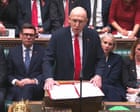
Budget Analysis: Key Questions Answered by Expert Editors
Discover Chancellor John Healey's maiden budget explained. Economics and politics editors break down what was said, why, and what was omitted.

Budget Analysis: Understanding Chancellor John Healey's Financial Plan
A comprehensive budget analysis requires expert interpretation to help citizens understand the broader implications of government spending decisions. The Guardian's lead economics editor Heather Stewart and political editor Pippa Crerar provide essential insights into Chancellor John Healey's inaugural budget, breaking down complex fiscal measures into accessible explanations for readers seeking clarity.
Decoding the Chancellor's Key Proposals
Chancellor John Healey's budget presentation introduced numerous policy changes affecting various sectors of the British economy. The budget analysis conducted by experienced financial journalists reveals the strategic thinking behind major announcements, from tax adjustments to investment priorities. Understanding these decisions requires examining both explicit statements and deliberate omissions from the fiscal speech.
The chancellor's approach reflects broader government priorities established during the current parliamentary term. By analyzing spending allocations, tax modifications, and funding commitments, observers gain insight into how the administration intends to balance economic growth with fiscal responsibility. The budget analysis framework helps contextualize these decisions within contemporary economic challenges.
What the Chancellor Actually Said
John Healey's budget address contained specific commitments regarding public services, infrastructure investment, and welfare provisions. The detailed budget analysis examines whether announced figures align with previous government commitments and electoral promises. Financial experts scrutinize language precision, as seemingly minor wording choices often signal important policy intentions or limitations.
The chancellor articulated spending priorities across multiple departments, with particular emphasis on areas flagged as government priorities. Budget analysis specialists note that the distribution of resources reveals actual policy preferences beyond rhetorical statements. Some sectors received substantial allocations while others faced continued constraints, patterns that experienced observers interpret as signals of long-term strategic direction.
The Reasoning Behind Budget Decisions
Understanding the rationale for Chancellor John Healey's budget choices requires contextualizing decisions within economic conditions, international circumstances, and political considerations. The budget analysis process involves examining assumptions underlying fiscal projections, growth estimates, and revenue forecasts. These foundations determine whether proposed spending levels prove sustainable or face future adjustment pressures.
Political and economic factors intertwine throughout budget planning processes. The chancellor faces competing demands from various constituencies while maintaining fiscal credibility with financial markets and international observers. Budget analysis reveals how these tensions influenced final spending allocations, tax decisions, and borrowing strategies. The maiden budget presentation establishes important precedents for subsequent fiscal years.
Notable Absences in the Budget Framework
Budget analysis extends beyond examining stated commitments to identifying conspicuous omissions. Issues receiving minimal mention or deliberate exclusion from the chancellor's address often matter significantly to particular constituencies. The absence of major policy announcements regarding certain sectors suggests either deliberate postponement or conscious de-prioritization compared to previous government administrations.
These strategic silences warrant careful examination alongside positive commitments. What the chancellor chose not to address may prove as consequential as explicit statements. Budget analysis specialists recognize that political communication involves both action and inaction, with omissions sometimes conveying messages as powerful as detailed announcements.
Expert Editorial Assessment
The Guardian's journalism team brings extensive experience analyzing government fiscal policy and political strategy. Their budget analysis combines technical economic understanding with political judgment regarding feasibility and likely outcomes. This dual perspective enables readers to comprehend both technical aspects of budget proposals and their political implications for the governing administration.
Economics editors focus on fiscal sustainability, inflation implications, and economic growth prospects emerging from proposed spending levels. Political editors contextualize decisions within government legislative priorities, electoral calculations, and party management considerations. This integrated analysis approach provides comprehensive understanding impossible through single-perspective examination.
Implications for Citizens and the Economy
Chancellor John Healey's budget ultimately affects household finances, employment prospects, public service quality, and economic opportunities. The budget analysis conducted by experienced journalists helps citizens evaluate how government spending decisions might influence their personal circumstances. Understanding these connections between abstract fiscal policy and concrete life impacts represents essential democratic literacy.
The budget framework establishes constraints and opportunities for economic activity across multiple sectors. Businesses, workers, investors, and benefit recipients all experience different implications from the chancellor's decisions. Comprehensive budget analysis ensures various perspectives receive consideration rather than focusing exclusively on privileged constituencies.
Moving Forward: Budget Implementation and Consequences
Budget analysis doesn't conclude with the fiscal speech. The subsequent months reveal how announced commitments translate into actual government action, resource allocation, and policy implementation. Observers monitor whether the chancellor's priorities persist through departmental spending decisions or face revision based on changed circumstances.
The maiden budget establishes patterns and expectations for future fiscal years. Chancellor John Healey's initial approach suggests broader government priorities and constraints likely to shape subsequent budgets. Ongoing analysis tracks whether stated commitments prove achievable and whether new pressures force policy adjustments. The budget analysis process continues as government implements fiscal decisions.