Canadian Wildfire Displaces 12,000: Okanagan Residents Await Fate
Over 12,000 evacuated as Canadian wildfire devastates Okanagan region. Residents fear home losses in massive wildfire emergency affecting British Columbia.
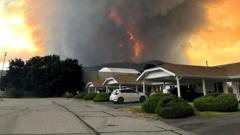
Massive Canadian Wildfire Forces Unprecedented Evacuation
A devastating Canadian wildfire evacuation has displaced more than 12,000 residents across the scenic Okanagan region, marking one of the most significant emergency responses in the area's history. The rapidly spreading fire has consumed vast stretches of forest and residential areas, leaving families uncertain about whether their homes will still be standing when they're permitted to return.
Scale of Displacement and Community Impact
The Canadian wildfire evacuation represents a critical moment for thousands of families who hastily packed belongings and fled their communities. Emergency officials coordinated the evacuation of entire neighborhoods as flames advanced through residential zones. The speed and intensity of the fire allowed residents minimal time to gather possessions, with many describing harrowing escapes as smoke engulfed surrounding areas.
Evacuation centers have been established throughout the region to accommodate displaced families. Support services, including counseling and emergency housing assistance, have been mobilized to help those affected by the Canadian wildfire evacuation. Community centers and schools now serve as temporary shelters where families attempt to maintain some semblance of normalcy while anxiety about their properties consumes their thoughts.
Resident Uncertainty and Home Security Concerns
Many evacuees express deep uncertainty about the fate of their homes. Residents have described experiencing numerous close calls in recent months, with fire threatening their properties multiple times before this latest evacuation. The cumulative stress of repeated threats has taken an emotional toll on the community, with many questioning whether it remains safe to continue living in the region.
Some homeowners have already confirmed significant losses, while others wait anxiously for official assessments. The lack of real-time information about specific properties intensifies the psychological burden on displaced residents. Families separated from their homes struggle with the unknown, unable to verify whether their most valuable possessions and irreplaceable memories remain intact.
Fire Spread and Environmental Challenges
The Canadian wildfire spread across difficult terrain, making containment efforts extremely challenging for firefighting teams. Dense forest areas combined with summer heat and dry conditions created ideal circumstances for rapid fire progression. The Okanagan region's topography, featuring valleys and ridges, can accelerate fire movement and complicate suppression operations.
Emergency Response and Recovery Efforts
Provincial and federal resources have been deployed to combat the advancing flames. Firefighting teams, aerial support, and emergency management personnel work around the clock to protect lives and property. Despite these efforts, the Canadian wildfire evacuation remains necessary as crews focus on establishing firebreaks and protecting critical infrastructure.
Recovery planning has begun, though immediate priorities focus on suppression and life safety. Once the fire is contained, extensive assessment and restoration work will commence across affected areas. Community leaders coordinate with provincial authorities to ensure comprehensive support for displaced residents throughout the recovery process.
Looking Forward: Climate and Safety Concerns
The Canadian wildfire evacuation highlights ongoing concerns about wildfire frequency and intensity in western Canada. Climate patterns, drought conditions, and forest density contribute to increasingly severe fire seasons. Residents and officials alike recognize that adaptation strategies and preventative measures will be essential for future protection.
As the situation develops, the 12,000 evacuated residents of the Okanagan region remain hopeful for containment and the opportunity to return home safely. The Canadian wildfire evacuation serves as a stark reminder of the region's vulnerability to natural disasters and the importance of preparedness and rapid response systems.


