Gaza death toll rises after Israeli military operations despite Hamas agreement
At least 13 Palestinians killed in Israeli airstrikes on Gaza City, Khan Younis and Deir el-Balah targeting military operatives following Hamas disarmament acco...
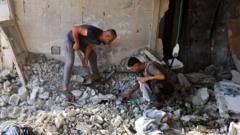
Escalating Violence in Gaza Following Ceasefire Negotiations
The humanitarian situation in Gaza has deteriorated significantly as Israeli strikes Gaza operations have resulted in the deaths of at least 13 individuals across multiple locations in the Palestinian territory. These military operations occurred in the aftermath of discussions regarding a potential Hamas disarmament agreement, raising international concerns about the fragile status of ongoing negotiations and the protection of civilian populations.
The Israeli Defense Forces have confirmed that the Israeli strikes Gaza campaign was specifically designed to target military operatives and operational infrastructure associated with Hamas. The strikes encompassed three major population centers: Gaza City in the northern sector, Khan Younis in the central region, and Deir el-Balah in the southern area of Gaza.
Targets and Military Objectives
According to official Israeli military statements, the operations focused on eliminating what authorities describe as active military threats within the densely populated Palestinian territory. The Israeli Defense Forces maintained that all targets were chosen based on intelligence indicating the presence of Hamas military personnel and infrastructure used for coordinating operations against Israeli territory.
Gaza City, historically significant as a major urban center and longtime stronghold of various Palestinian factions, experienced multiple airstrikes. Khan Younis, located in the southern Gaza Strip and serving as an important administrative and military hub, was subjected to intensive military operations. Deir el-Balah, situated in the central region of Gaza and hosting numerous civilian facilities alongside military positions, also faced significant strikes during this period.
Humanitarian Crisis and Civilian Impact
The reported casualties represent a substantial humanitarian toll in a territory already facing severe restrictions and ongoing conflict. The death toll of at least 13 individuals highlights the continuing risk to Palestinian civilians living in areas where military operations occur. International humanitarian organizations have expressed concern about distinguishing between military targets and civilian infrastructure in densely populated urban areas.
Families residing in the affected neighborhoods of Gaza City, Khan Younis, and Deir el-Balah have reported significant trauma and displacement following the strikes. Medical facilities throughout Gaza have been overwhelmed with casualties, further straining healthcare resources already depleted by years of blockade and previous conflicts.
Context of Disarmament Discussions
The timing of these Israeli strikes Gaza operations coincides with reported progress in discussions regarding Hamas disarmament and the potential framework for a sustainable ceasefire agreement. These negotiations had suggested a possible pathway toward reducing military escalation and protecting civilian populations on both sides of the conflict.
However, the continuation of military operations despite ongoing diplomatic efforts raises questions about the commitment of various parties to peaceful resolution and the possibility of achieving lasting agreements. Both Israeli and Palestinian leadership have faced criticism regarding their approach to balancing security concerns with diplomatic progress.
Regional and International Response
The incident has prompted statements from regional governments and international organizations monitoring the conflict. Several nations have called for renewed emphasis on diplomatic channels and protection of civilians during any ongoing military operations. The United Nations and various humanitarian bodies have reiterated the importance of distinguishing between combatants and non-combatants in all military actions.
International pressure continues to mount on both Israeli and Palestinian authorities to prioritize civilian protection and engage in meaningful negotiations aimed at establishing permanent peace. The continuation of casualties despite disarmament discussions underscores the complexity of achieving sustainable conflict resolution in the region.
Looking Forward
As investigations into the strikes continue, questions persist about whether the military operations align with international humanitarian law standards. Both military necessity and civilian protection remain central considerations in international discourse surrounding the conflict.
The reported deaths in Gaza City, Khan Younis, and Deir el-Balah represent the latest chapter in a prolonged cycle of violence that has characterized the Israeli-Palestinian conflict. Moving forward, the international community emphasizes the critical importance of establishing durable ceasefire mechanisms and creating space for sustainable diplomatic solutions that protect all civilian populations in the region.


