Historic Solar Eclipse Captivates Millions Across UK and Europe
A rare solar eclipse mesmerizes millions in the UK and Europe, with 95% sun coverage in Cornwall and totality in Spain. Spectacular once-in-a-generation event.
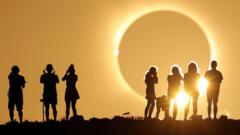
An Unprecedented Celestial Event Unfolds Across Europe
A remarkable solar eclipse captured the attention of millions of people throughout the United Kingdom and continental Europe, delivering an unforgettable experience to sky watchers and astronomy enthusiasts. This extraordinary solar eclipse event represented a once-in-a-generation phenomenon that reminded observers of the dynamic relationship between our planet, Moon, and Sun.
Record Coverage in Southwest England
The southwestern region of England witnessed extraordinary solar eclipse activity as the lunar shadow traversed across the landscape. In Cornwall specifically, observers documented that more than 95% of the Sun's visible disc was obscured by the Moon during the peak of the event. This impressive coverage transformed day into twilight conditions, creating an atmospheric experience that left thousands of spectators in awe of the celestial mechanics on display.
Despite the high percentage of solar coverage in the British Isles, residents in this region experienced a partial solar eclipse rather than totality. Nevertheless, the near-total darkness and dramatic lighting effects provided a compelling visual spectacle that demonstrated the power of astronomical events to unite communities in shared wonder.
Complete Totality Experienced in Spain
While the United Kingdom enjoyed substantial but partial solar eclipse coverage, neighboring regions of Spain had the privilege of experiencing the complete phenomenon. Parts of the Iberian Peninsula fell under the path of totality, where the Moon completely blocked the Sun's photosphere, revealing the ethereal solar corona to observers below.
This total solar eclipse created conditions of near-complete daylight darkness across affected Spanish territories, allowing viewers to witness the Sun's outer atmosphere in all its glory. The difference between partial and total eclipse experiences highlighted the geographic precision required for such astronomical events and underscored why communities within the totality path consider themselves exceptionally fortunate.
Understanding the Once-in-a-Generation Nature
The classification of this solar eclipse as a once-in-a-generation event reflects the rarity of such occurrences for specific geographic locations. While solar eclipses happen regularly somewhere on Earth, the frequency of total or near-total solar eclipses at any given location spans centuries. For millions of residents across the UK and Europe, this solar eclipse represented a lifetime opportunity to witness this spectacular alignment of celestial bodies.
The extended timeframe between similar events in the same location emphasizes the astronomical significance of this solar eclipse, driving substantial public interest and preparation among both casual observers and dedicated astronomers.
Public Response and Scientific Observation
The solar eclipse drew unprecedented public engagement, with millions taking time to observe the event safely through specialized eclipse glasses and viewing equipment. Schools, observatories, and public institutions organized viewing events and educational programs to help communities appreciate the scientific principles underlying the solar eclipse phenomenon.
Scientists and researchers utilized this solar eclipse as an opportunity to conduct specialized observations and gather data about solar corona behavior, solar wind patterns, and other phenomena visible only during totality or near-totality conditions.
Impact on Communities and Cultural Significance
Beyond its scientific importance, the solar eclipse fostered a sense of collective experience and wonder across diverse populations throughout Europe. The event transcended national borders and social divisions, uniting millions in shared appreciation for the cosmos and humanity's place within it.
For many individuals, the solar eclipse created lasting memories and sparked renewed interest in astronomy and space science. The widespread public enthusiasm demonstrated the enduring human fascination with celestial events and their capacity to inspire awe and contemplation.


