Rail Track Defect Discovered at Lewes Derailment Location
RAIB investigation reveals track irregularity near Lewes derailment site. Initial findings expose critical rail infrastructure concerns requiring immediate atte...
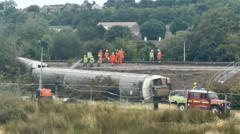
Track Defect Identified in RAIB Investigation
A significant track defect Lewes has been uncovered following preliminary examination by the Rail Accident Investigation Branch. The discovery marks a critical development in understanding the circumstances surrounding the derailment incident that occurred in proximity to the Sussex location.
The investigation team confirmed that an irregularity was detected at the precise location where the derailment took place. This finding represents an important piece of evidence in establishing potential causative factors related to the railway accident. Authorities are treating the discovery with considerable seriousness given its direct correlation to the incident site.
Details of the Rail Infrastructure Irregularity
According to RAIB sources, the identified defect presents characteristics that warrant thorough technical examination. The nature of the irregularity suggests potential contributing elements to the derailment occurrence. Engineers and specialists have begun comprehensive testing to determine the severity and timeline of the defect development.
The track defect near the derailment site was not previously documented in routine maintenance records, raising questions about inspection protocols and oversight procedures. Railway infrastructure maintenance teams are now conducting extended surveys along the affected section to identify any additional anomalies requiring remediation.
Investigation Scope and Methodology
The RAIB investigation encompasses multiple aspects of the incident, with the track defect representing one significant component of their broader analysis. Investigators are examining maintenance records, inspection histories, and operational data to establish a comprehensive timeline of events leading to the derailment.
Specialized equipment has been deployed to measure and document the exact specifications of the irregularity. High-precision laser scanning and ultrasonic testing technologies are being utilized to assess track geometry and subsurface conditions. These methodologies ensure accurate characterization of the defect and its potential impact on train operations.
Safety Implications and Railway Response
The discovery has prompted immediate reassessment of safety protocols across comparable rail sections. Network Rail and relevant authorities have implemented enhanced monitoring procedures to prevent similar incidents. Speed restrictions may be implemented on affected lines pending completion of detailed analysis.
Railway operators are communicating with stakeholders regarding the findings and remedial measures being undertaken. The track defect discovery underscores the importance of continuous infrastructure evaluation and proactive maintenance scheduling. Officials emphasize that passenger safety remains the paramount concern throughout the investigative process.
Future Actions and Preventive Measures
Engineers are developing corrective action plans addressing the identified irregularity. Permanent repairs will be implemented following completion of forensic examination. The incident has highlighted potential gaps in predictive maintenance systems, prompting industry-wide review of inspection technologies and frequencies.
The track defect investigation will contribute valuable data to railway safety improvement initiatives. Recommendations emerging from this case are expected to inform enhanced protocols for infrastructure assessment and defect prevention across the national rail network.


