Technology's Growing Role in Wildfire Detection and Prevention
Explore how advanced technology complements firefighters in wildfire detection, prevention and response efforts. Learn about innovations transforming wildfire m...
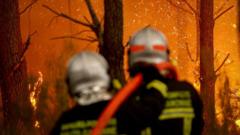
Technology's Growing Role in Wildfire Detection and Prevention
The integration of wildfire detection technology into modern firefighting operations represents a significant evolution in how communities protect themselves against devastating blazes. While advanced systems continue to emerge for identifying and monitoring fires, the essential role of trained firefighters in actual suppression efforts remains irreplaceable. Understanding this partnership between innovation and human expertise is crucial for comprehending contemporary wildfire management strategies.
How Wildfire Detection Technology Works
Modern wildfire detection technology employs multiple sophisticated approaches to identify emerging fires before they escalate into major threats. Satellite-based monitoring systems continuously scan landscapes, detecting heat signatures that indicate potential ignition points. These space-based platforms provide real-time data across vast geographic areas, allowing emergency coordinators to identify fires in remote regions that would otherwise go undetected for critical hours.
Ground-based sensor networks complement satellite surveillance by offering granular detection capabilities. Weather stations equipped with flame detection sensors, combined with ground-penetrating infrared technology, create a comprehensive monitoring infrastructure. These systems analyze temperature fluctuations, moisture levels, and atmospheric conditions to predict fire probability and track active blazes with precision impossible to achieve through human observation alone.
Artificial intelligence and machine learning algorithms process vast datasets from these detection systems, identifying patterns that indicate high-risk conditions. Predictive analytics enable fire prevention personnel to position resources strategically before fires ignite, reducing response times and improving community protection.
The Irreplaceable Role of Firefighters
Despite technological advances in wildfire detection technology, the fundamental mission of suppressing active wildfires remains exclusively within the domain of trained firefighters. These professionals combine specialized training, equipment expertise, and tactical decision-making that no automated system can replicate. Firefighters assess complex terrain, evaluate wind patterns in real-time, and make instantaneous tactical adjustments that determine success in containment efforts.
Ground crews conduct controlled backburns, establish firebreaks, and direct water and retardant deployment with precision. Aerial firefighting teams pilot helicopters and specialized aircraft under hazardous conditions, delivering suppressive materials to critical fire perimeters. These skilled professionals evaluate constantly shifting fire behavior and adapt their strategies accordingly—a cognitive capability that distinguishes human expertise from automated systems.
The psychological and physical demands of firefighting require seasoned professionals who maintain composure during extreme circumstances. Firefighters coordinate with emergency management agencies, conduct rescues, and provide crucial community communication during crisis situations. Their presence provides reassurance and coordination that technology cannot deliver.
Integration of Technology and Human Expertise
The most effective wildfire management approaches combine wildfire detection technology with experienced firefighting personnel. Advanced detection systems enable faster response deployment, allowing firefighters to reach fires at earlier stages when suppression efforts prove more effective. This integration substantially improves outcomes compared to either approach utilized independently.
Dispatch centers equipped with real-time monitoring data can direct firefighting resources with unprecedented accuracy. Commanders receive detailed information about fire progression, weather developments, and resource availability, enabling informed strategic decisions. This information asymmetry—where technology provides comprehensive situational awareness—enhances firefighter effectiveness and safety.
Emerging Technologies Enhancing Wildfire Response
Drone technology represents one of the most promising developments in wildfire management. Unmanned aerial vehicles equipped with thermal cameras can scout fire perimeters, assess evacuation risks, and locate trapped individuals without exposing personnel to immediate danger. Drones gather critical intelligence that informs firefighting strategies and emergency response coordination.
Real-time communication systems connect field personnel with command centers, ensuring coordinated response across multiple agencies. Mobile applications provide firefighters with immediate access to updated fire behavior predictions, resource locations, and weather data. These technological enhancements amplify individual firefighter effectiveness by providing access to comprehensive operational information.
The Future of Wildfire Management
Future wildfire detection technology will likely incorporate increasingly sophisticated monitoring capabilities, from advanced satellite systems to AI-powered predictive modeling. However, these developments will serve to enhance firefighting operations rather than replace human personnel. The future landscape involves deeper integration between automated systems and human expertise, creating more responsive and effective emergency management frameworks.
Investment in both technological innovation and firefighter recruitment remains essential for community safety. Technology addresses the detection and prediction challenge, enabling early intervention. Firefighters provide the tactical execution and community protection necessary to minimize damage and preserve lives. This complementary relationship between innovation and professional expertise defines modern wildfire management strategy.


