Trident Submarine Upgrade Drives UK Defence Spending
PM emphasises Trident renewal as cornerstone of defence investment, launching new nuclear submarine phase in Barrow-in-Furness to boost community reindustrialis...
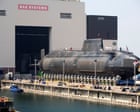
Trident Renewal Becomes Central to National Defence Strategy
The United Kingdom's commitment to Trident renewal has emerged as a pivotal component of contemporary defence spending, with high-level government officials positioning the nuclear submarine programme as essential infrastructure investment. The Prime Minister's strategic vision centres on demonstrating how Trident renewal generates tangible benefits across multiple sectors of the economy, particularly within industrial communities requiring economic revitalisation.
Government representatives argue that Trident renewal represents far more than military capability enhancement; it functions as a comprehensive economic stimulus mechanism. The £31 billion investment allocated to the Dreadnought-class submarine programme exemplifies this dual approach, simultaneously strengthening national security infrastructure whilst catalysing manufacturing employment and industrial development within the Cumbrian region.
Barrow-in-Furness: The Heart of Submarine Manufacturing
Barrow-in-Furness stands as the geographical epicentre of Britain's submarine construction industry, hosting the facilities where Dreadnought-class submarines are engineered and assembled. This Cumbrian town has historically maintained its significance within the defence sector, with submarine manufacturing constituting a cornerstone of local economic activity spanning multiple decades.
The launch of the next phase of nuclear submarine replacement in Barrow-in-Furness underscores governmental recognition of the town's irreplaceable role within Britain's strategic defence framework. Officials emphasise that continued investment in submarine construction sustains thousands of specialised manufacturing jobs whilst preserving critical technical expertise accumulated over generations.
Defence Spending as Community Investment
Senior government figures present Trident renewal through an economic lens, characterising defence spending as community investment rather than purely military expenditure. This narrative emphasises how taxpayer funding directed towards nuclear submarine programmes circulates throughout regional economies, supporting supply chains, manufacturing facilities, and skilled workforce development.
The Dreadnought-class submarines represent technological advancement requiring sophisticated engineering talent. Manufacturers, subcontractors, and specialist suppliers distributed across the country benefit from the comprehensive supply chain supporting submarine construction. This economic multiplier effect extends beyond Barrow-in-Furness, reaching engineering firms, component manufacturers, and research institutions throughout the United Kingdom.
Reindustrialisation Strategy and Economic Recovery
The Prime Minister's broader reindustrialisation vision positions Trident renewal as a strategic instrument for economic recovery and manufacturing sector strengthening. Government policy frames defence spending, particularly on sophisticated projects such as nuclear submarine replacement, as mechanisms for rebuilding Britain's industrial capacity following decades of manufacturing decline.
Officials highlight that the £31 billion Dreadnought-class programme maintains employment within high-value manufacturing sectors, preserving technical expertise essential for long-term competitiveness. This perspective views Trident renewal not merely as expense but as investment generating sustained economic benefits throughout defence-related industries and supporting communities historically dependent on manufacturing activity.
Strategic Timing of Programme Launch
The announcement of the next phase of nuclear submarine replacement occurs within a broader context of governmental economic policy prioritising strategic infrastructure development. Trident renewal emerges as a flagship project demonstrating commitment to both national security and regional economic development.
By launching subsequent phases of the submarine programme from Barrow-in-Furness, government officials send deliberate signals regarding infrastructure investment priorities and commitment to sustaining manufacturing employment within communities facing economic transition. The Dreadnought-class submarine programme demonstrates tangible government support for advanced manufacturing capabilities within the United Kingdom.
Long-Term Defence and Economic Commitments
Trident renewal commitments extend across multiple decades, requiring sustained funding, technical expertise, and manufacturing capacity. This extended timeline provides stability for defence-sector employment and supports long-term economic planning within communities dependent on submarine construction and related defence manufacturing activities.
The nuclear submarine replacement programme represents a significant component of Britain's strategic defence posture, whilst simultaneously serving as a vehicle for economic reindustrialisation. Officials argue that this integration of defence capability and economic development demonstrates how national security investments contribute to broader prosperity objectives within manufacturing communities throughout the United Kingdom.