Artificial Ice Pyramids Rescue Water Crisis in Indian Himalayan Villages
Discover how Indian mountain villages use innovative artificial ice pyramids to secure water for spring crops. A sustainable solution to Himalayan water scarcit...
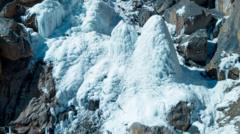
Artificial Ice Pyramids: A Lifeline for Mountain Communities
Communities across India's Himalayan region are implementing an innovative approach to combat severe water shortages through the construction of artificial ice pyramids. These remarkable structures represent a breakthrough solution for agricultural communities facing unpredictable seasonal patterns and diminishing natural glacier resources. The artificial ice pyramids serve as frozen water reserves that melt gradually during critical growing seasons, ensuring consistent irrigation supply for crops that depend on timely moisture availability.
Understanding the Technology Behind Artificial Ice Pyramids
The concept of artificial ice pyramids operates on a deceptively simple yet highly effective principle. During winter months when temperatures plummet in mountainous regions, water is diverted from natural streams and allowed to freeze in specially designed pyramid-shaped formations. These structures are engineered with specific dimensions and orientations that maximize freezing efficiency while minimizing surface area exposure that could accelerate premature thawing. The pyramid design proves superior to traditional methods because it slows down melting rates during warmer months, creating an extended water supply period that aligns precisely with spring planting and early summer cultivation requirements.
The Agricultural Challenge in Mountain Regions
Himalayan farming communities have traditionally relied on glacier-fed streams to irrigate their fields during spring months when crops require substantial water inputs. However, climate change and rapid glacier retreat have disrupted this natural rhythm, leaving farmers vulnerable to crop failures and economic devastation. The transition to artificial ice pyramids emerged as a pragmatic response to environmental shifts that threaten agricultural viability. These communities recognized that without intervention, their traditional farming systems would become unsustainable within years.
How Artificial Ice Pyramids Function Throughout the Year
The operational cycle of artificial ice pyramids begins in late autumn when temperatures consistently drop below freezing. Local water sources are channeled into designated areas where natural atmospheric conditions gradually freeze the accumulated water into massive ice formations. Engineers design each pyramid to withstand pressure from its own weight while maintaining structural integrity throughout months of storage. As spring arrives and temperatures rise, the ice begins melting at controlled rates, releasing water through channels that feed directly into agricultural irrigation systems. The pyramid's geometric configuration naturally slows melting compared to flat ice sheets, extending the water supply window across critical months when crops desperately need moisture.
Environmental and Economic Benefits
The implementation of artificial ice pyramids generates multiple advantages beyond simple water provision. These structures represent an environmentally sustainable approach that doesn't depend on pumping groundwater or constructing resource-intensive dams. Communities preserve existing aquifers while reducing pressure on stressed natural water sources. Economically, the solution proves cost-effective for villages lacking capital for major infrastructure projects. Local residents contribute labor during construction phases, distributing costs across entire communities while building social cohesion.
Community Success Stories and Results
Villages that have adopted artificial ice pyramid technology report measurable improvements in agricultural productivity and economic stability. Farmers successfully cultivate crops during seasons when water shortages previously caused widespread crop failure. The predictable water supply from these structures eliminates uncertainty in planting schedules, allowing farmers to implement more sophisticated agricultural planning. Multiple Himalayan communities now maintain several artificial ice pyramids as backup water sources, creating redundancy that protects against system failures during exceptionally warm springs.
Challenges and Future Development
Despite their effectiveness, artificial ice pyramids require continuous refinement and community commitment. Unusually warm winters threaten premature melting before agricultural season arrives. Communities must monitor weather patterns closely and adjust water management strategies accordingly. Climate scientists working with local farmers are researching enhanced insulation techniques and alternative materials that could improve pyramid performance. Future iterations may incorporate reflective coatings that reduce heat absorption or underground storage chambers that further extend preservation capabilities.
Scaling Innovation Across Mountain Communities
As awareness spreads about artificial ice pyramids success, other Himalayan villages explore implementation possibilities within their specific environmental contexts. Regional governments increasingly recognize these structures as viable components of comprehensive water management strategies. Educational programs teach younger generations traditional knowledge combined with modern engineering principles necessary for maintaining and improving these systems. The artificial ice pyramids model demonstrates how indigenous problem-solving approaches, enhanced with contemporary understanding, can create sustainable solutions for climate-challenged agricultural communities.


