Helium-3: The Moon's Rare Resource and Future Mining Prospects
Discover why Helium-3 is valuable and how lunar mining could supply this rare isotope. Learn about moon resource extraction plans and helium-3 applications.
Understanding Helium-3 and Its Importance
Helium-3 moon mining represents one of the most intriguing possibilities in space exploration and resource acquisition. This rare isotope, distinct from the more common Helium-4, has captured the attention of scientists, engineers, and investors worldwide due to its unique properties and potential applications in advanced technology sectors.
Helium-3 is a stable, non-radioactive isotope of helium containing two protons and one neutron. Unlike its counterpart Helium-4, which is readily available on Earth, this isotope exists in extremely limited quantities on our planet. The scarcity of Helium-3 on Earth stems from its production method, which typically requires nuclear reactors or other specialized facilities. This constraint has made the element exceptionally expensive and has driven interest in alternative sources, particularly extraterrestrial deposits.
Why Helium-3 Matters: Current Applications and Future Potential
The significance of Helium-3 extends across multiple scientific and industrial domains. Currently, this isotope serves critical functions in medical imaging, nuclear research, and detection technologies. Medical professionals utilize Helium-3 in specialized imaging procedures that provide unprecedented insights into lung function and respiratory conditions. Research institutions depend on this element for fundamental physics experiments and neutron detection in scientific laboratories.
Looking forward, the potential applications for Helium-3 expand considerably. Scientists have identified promising prospects in advanced energy systems, particularly in fusion reactor development. Helium-3 could theoretically serve as a fuel source in next-generation fusion reactors, offering a cleaner and more efficient energy alternative compared to conventional nuclear fission. This possibility has sparked significant interest among energy researchers and environmental advocates seeking sustainable power solutions.
The Market Dynamics and Rising Demand for Helium-3
Current market conditions reveal compelling reasons for the surge in Helium-3 interest. Existing terrestrial supplies remain constrained, with production limited to a handful of facilities capable of manufacturing this isotope. This bottleneck has resulted in prices that reflect extreme scarcity. Industry analysts forecast substantial increases in demand across multiple sectors, particularly as medical applications expand and research institutions intensify their reliance on this element.
The projected growth in Helium-3 demand stems from several factors. Medical facilities worldwide are adopting advanced diagnostic techniques that incorporate this isotope. Simultaneously, climate change concerns drive investment in fusion energy research, which promises revolutionary potential if Helium-3 becomes available in sufficient quantities. These converging trends suggest that terrestrial production alone cannot satisfy future requirements, creating an economic imperative to pursue alternative sources.
Lunar Helium-3 Deposits: Nature's Abundant Reserve
The moon harbors vast quantities of Helium-3, accumulated over billions of years through solar wind interactions. Unlike Earth, the moon lacks a protective magnetic field comparable to ours, allowing solar wind particles to penetrate directly into lunar regolith. This process has resulted in substantial concentrations of Helium-3 embedded in moon dust and subsurface materials. Geological surveys estimate that lunar deposits could contain millions of tons of this precious isotope, vastly exceeding Earth's total Helium-3 inventory.
Scientists have detected Helium-3 signatures in moon samples collected during Apollo missions, providing concrete evidence of these extraterrestrial deposits. Analysis of lunar material confirms that extraction is theoretically feasible, though challenging. The concentration of Helium-3 in moon soil varies by location, with certain regions containing higher densities than others. Understanding these distribution patterns is essential for planning efficient mining operations.
Plans for Moon Mining and Resource Extraction
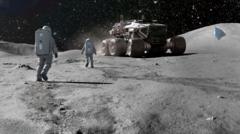
Multiple organizations and national space agencies are developing strategies for Helium-3 moon mining operations. These ambitious plans contemplate establishing permanent lunar bases equipped with specialized extraction equipment. The proposed methodology involves heating lunar regolith to release trapped gases, including Helium-3, which would then be collected and processed for transport back to Earth.
Private space companies have emerged as prominent players in these discussions, partnering with government agencies to develop practical mining technologies. International cooperation appears necessary given the scale and complexity of such endeavors. Technological challenges remain substantial, including the development of equipment capable of functioning in the harsh lunar environment, with extreme temperature variations and vacuum conditions.
Technical and Logistical Challenges
Extracting Helium-3 from the moon presents formidable obstacles. The vacuum environment, radiation exposure, and extreme temperature fluctuations create harsh conditions for equipment operation. Developing robotic systems capable of sustained performance in these circumstances represents a significant engineering challenge. Additionally, the cost of transporting extracted material from the lunar surface to Earth remains considerable, requiring advances in space transportation infrastructure.
Economic viability remains uncertain. Current calculations suggest that transportation costs might exceed the value of extracted Helium-3 unless prices increase dramatically or extraction efficiency improves substantially. Overcoming these economic barriers requires technological breakthroughs and sustained investment from multiple stakeholders committed to making lunar resource extraction economically sustainable.
Future Prospects and Global Space Strategies
Despite current challenges, Helium-3 moon mining features prominently in emerging space exploration strategies. Nations including China have explicitly included lunar resource acquisition in their space development plans. This international interest reflects confidence that technological and economic barriers will eventually be overcome. The convergence of scientific advancement, private sector innovation, and governmental commitment suggests that Helium-3 extraction from the moon may eventually transition from theoretical possibility to practical reality.
The prospect of accessing lunar Helium-3 reserves represents more than an isolated resource extraction initiative. It symbolizes humanity's expanding capacity to utilize space resources and marks a significant milestone in our transition toward becoming a spacefaring civilization capable of sustainable extraterrestrial development.


