Bolivia's Leader Declares Emergency Status Amid Growing Civil Unrest
Bolivia's president declares state of emergency following weeks of anti-government protests causing critical shortages of essential goods and supplies.
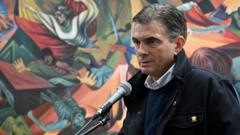
Bolivia's President Declares State of Emergency Amid National Crisis
Bolivia's head of state has formally declared a state of emergency following an extended period of civil unrest and anti-government demonstrations that have severely disrupted the nation's economic stability. This Bolivia state of emergency declaration represents a significant escalation in response to the unprecedented levels of social and political turbulence currently gripping the South American nation.
Weeks of Escalating Anti-Government Protests
The declaration comes after sustained weeks of anti-government protests that have progressively intensified across major urban centers throughout the country. These demonstrations, which began as localized expressions of dissent, have evolved into nationwide mobilizations reflecting deep-seated grievances among Bolivia's population regarding government policies and economic management.
The protests have drawn participation from diverse segments of society, including workers, students, indigenous communities, and civil society organizations united in their opposition to current governmental policies. The sustained nature of these demonstrations has created mounting pressure on state authorities to address underlying concerns that sparked the initial outburst of public discontent.
Critical Supply Chain Disruptions and Shortages
A direct consequence of the extended civil unrest has been the emergence of severe shortages affecting essential goods throughout Bolivia. Basic commodities that typically flow through normal distribution channels have become increasingly scarce, creating hardship for ordinary citizens dependent on reliable access to fundamental necessities.
The interruption of supply chains has been attributed to blockades, disruptions to transportation networks, and the general instability caused by ongoing demonstrations. Citizens have reported difficulty obtaining food staples, fuel, and medical supplies as the crisis deepens. Market shelves in major cities have been photographed nearly empty, underscoring the severity of shortages impacting the general population.
Impact on Daily Life and Economic Activity
The availability crisis has extended beyond mere inconvenience, affecting the broader economic functioning of the nation. Businesses face operational challenges due to supply uncertainties, workers struggle to maintain productivity amid uncertainty, and healthcare facilities confront difficulties obtaining necessary medical supplies to serve patients effectively.
Government Response and Emergency Measures
The declaration of Bolivia state of emergency provides authorities with expanded powers to address the crisis through emergency protocols. This formal designation allows the government to implement measures aimed at restoring order, ensuring the distribution of essential goods, and stabilizing the security situation.
The emergency status enables mobilization of additional resources, potentially including military or security force deployment to maintain critical infrastructure and facilitate the movement of supplies to affected communities. Such measures are typically employed as last resorts when conventional law enforcement mechanisms prove insufficient to manage widespread civil disorder.
Looking Forward: Implications and Concerns
Political analysts suggest the declaration represents both an acknowledgment of the gravity of the situation and a potential flashpoint for further escalation. How the government implements its emergency powers will significantly influence whether the crisis moves toward resolution or intensifies further.
International observers are monitoring the situation closely, particularly regarding how authorities balance the need to restore order with the protection of democratic freedoms and civil liberties. The sustainability of emergency measures and their ultimate impact on Bolivia's political and economic trajectory remain subjects of considerable uncertainty.
As Bolivia navigates this critical period, the challenges of addressing underlying grievances while managing immediate supply crises will determine whether the state of emergency succeeds in restoring stability or becomes a prolonged feature of the nation's political landscape.


